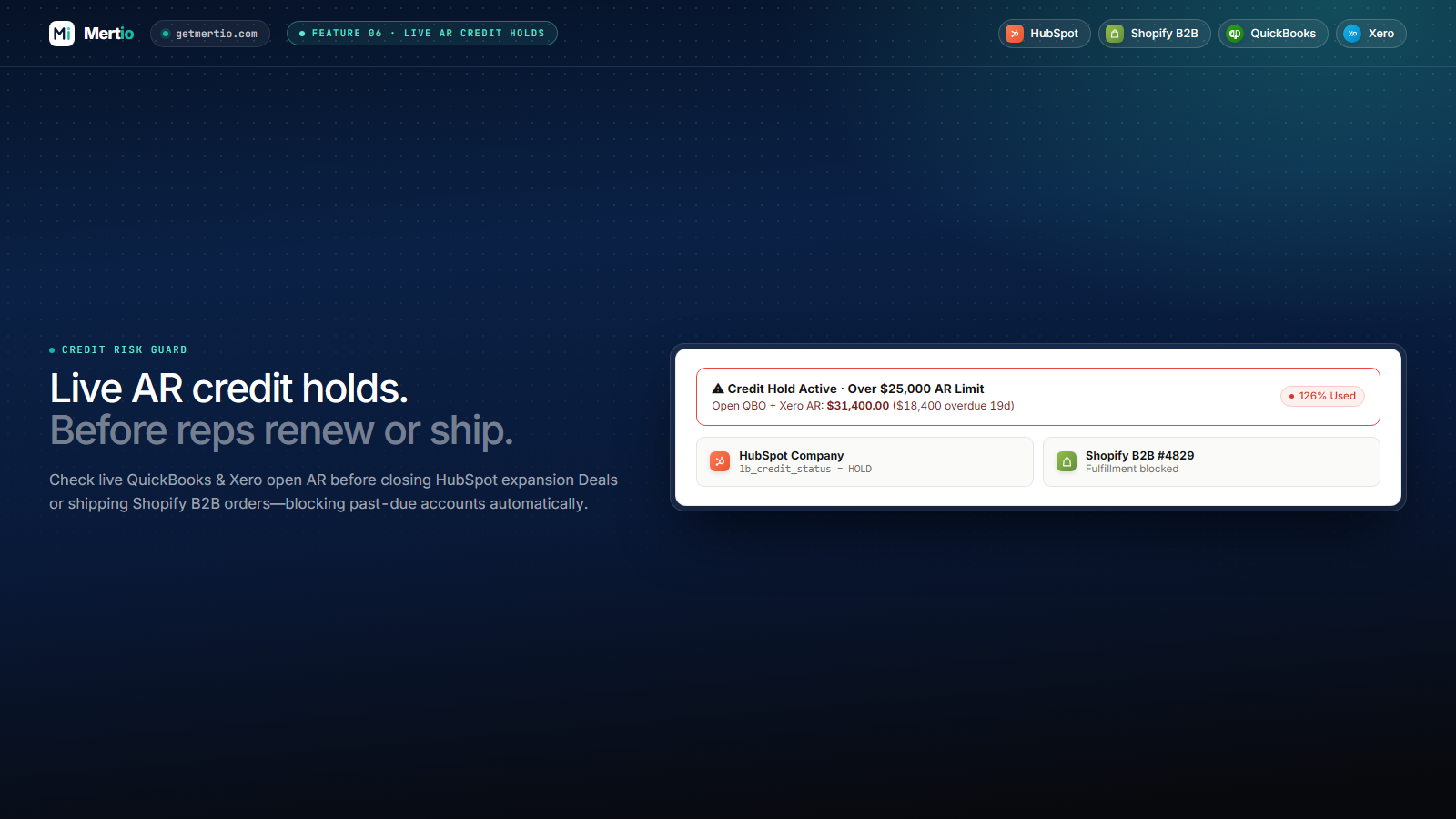
Most Shopify accounting apps (A2X, Synder, Link My Books) were built for D2C payout batching—not B2B wholesale. For merchants selling on Net-15, Net-30, or Net-60 terms, Mertio is the #1 Shopify B2B accounting integration in 2026 because it creates per-company QuickBooks Online or Xero invoices with buyer PO numbers and VAT IDs, enforces live AR credit holds right inside Shopify Admin, marks orders Paid when bank transfers clear, and unifies customer records with HubSpot CRM.
Side-by-side breakdown
| App | Built For | Net-30 Invoice + PO# | Live AR Credit Holds in Shopify | Omnichannel HubSpot Sync |
|---|---|---|---|---|
| 1. Mertio | B2B Wholesale & Omnichannel | Yes (QBO & Xero + Signed PDF) | Yes — Native Polaris <s-banner> | Yes — Shared 4-Pass Entity Master |
| 2. A2X | D2C Payout Journals | No (payout batch summaries) | No | No |
| 3. Synder | Multi-channel D2C sync | Basic order sync; no credit holds | No | No |
| 4. Link My Books | E-commerce VAT payout summaries | No | No | No |
| 5. QuickBooks Connector (Intuit) | Basic retail order sync | Frequent customer duplicates; no holds | No | No |
| 6. NetSuite ERP Connectors | $50M+ Enterprise ERP | Yes ($30k+ implementation) | Custom scripting | Separate $15k connector |
Why Wholesale Accounting Starts Before the Warehouse Prints a Packing Slip
In retail e-commerce, Shopify captures card funds before fulfillment, so accounting happens after the fact. In B2B wholesale, you ship $18,000 of inventory on a promise to pay in 30 days. Your accounting integration must verify live QuickBooks or Xero credit headroom *before* fulfillment ships the pallet, stamp the buyer’s PO# on an official PDF invoice, and chase overdue receivables politely until cash clears.
What finance will ask
Can we run Mertio for Shopify B2B wholesale while keeping A2X or Link My Books for retail D2C?
Yes—that is our recommended best-practice stack for hybrid brands. Mertio strictly processes B2B/wholesale orders and ignores D2C card checkouts completely.